
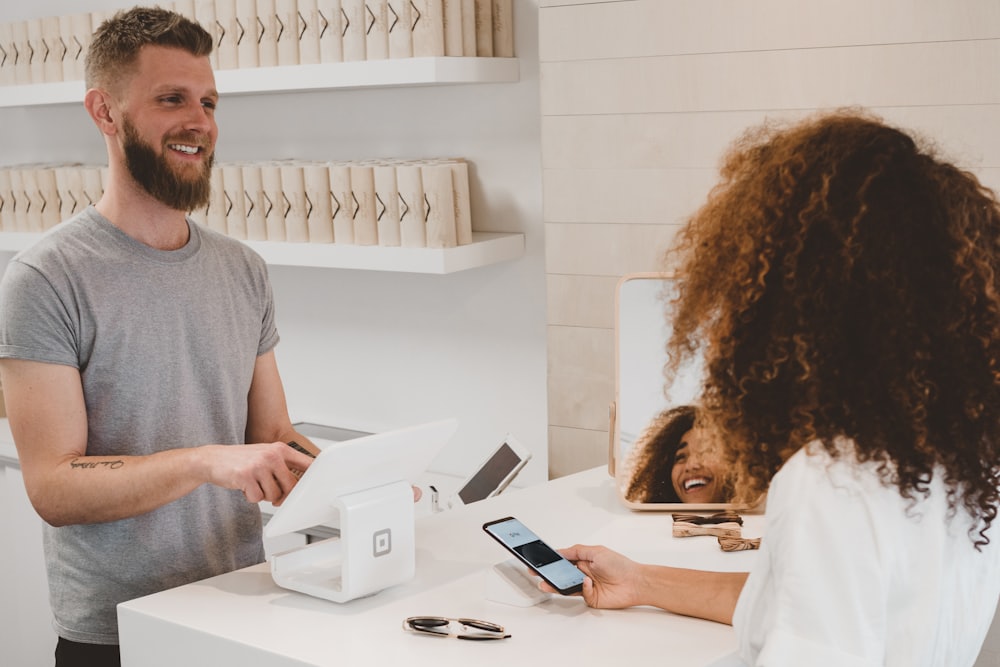
Thumbnail: The first dollar is the whole game. Everything else is repetition.
How to Start a Side Hustle With $0 This Weekend
It's 11:40 at night and you're doing the quiet, modern ritual: scrolling your banking app while the house sleeps. The number is fine. The number is always "fine." But "fine" doesn't cover the car noise you've been ignoring, the trip you keep postponing, the strange tight feeling when an unexpected bill lands. And underneath the math is something bigger — the suspicion that your income has a ceiling you didn't choose, set by an employer, a market, a economy that doesn't know your name. Somewhere between that app screen and sleep, the thought arrives again, the way it does every few months: I need a side hustle.
Then you open the internet, and the internet ruins it. Within ninety seconds you're being promised passive income, automated dropshipping empires, AI agencies that print money while you sleep, and a $497 course to teach you the secret. None of it mentions that you have $0 to start, a job that owns your weekdays, and a Saturday that already includes a grocery run and a family obligation. So the tab closes, the month passes, and the ceiling holds. This article is the anti-version of all that. No capital, no quitting anything, no funnels, no course. Just a weekend, the assets you already own, and a plan to earn your first honest dollar by Sunday night — because the first dollar, not the first thousand, is the moment everything changes.
Part 1: The $0 Mindset (You Are the Asset)
"It takes money to make money" is one of the most repeated and least true sentences in personal finance. It takes money to make money passively — to buy index funds, rental properties, ad inventory. But active income, the kind a side hustle is, has never required capital. It requires something you already have in abundance, and the entire first step is simply seeing it.
You own four zero-dollar assets. Skills — the things you do so automatically you've stopped counting them as abilities: writing clearly, organizing chaos, explaining technology, baking, fixing, photographing, translating, listening. Stuff — the dormant capital sitting in your closets and garage, worth real money to people three neighborhoods over. Time — not forty hours, but five honest weekend hours, which is genuinely enough. And network — forty to four hundred people who already trust you, each of whom knows forty to four hundred more. A $0 side hustle is simply the act of converting one of these four assets into a payment, on purpose, for the first time.
And here is the psychological truth that makes this weekend matter more than the money: your entire life, income has happened to you — a paycheck arrives, decided elsewhere. Earning even one dollar directly, person-to-person, breaks that spell. It proves, in a way no article can, that you can generate value from nothing but yourself. People who have felt that once behave differently about money forever. So we are not building a business this weekend. We are arranging a small, guaranteed proof. The business can come later; the proof comes first.
Part 2: Pick Your Lane in Twenty Minutes
There are exactly four lanes for a $0 start, and choosing one is the only decision you need to make before Saturday. Don't browse all four like a menu; read them, feel the small pull of recognition, and commit.
Lane 1: Sell What You Own (Fastest Cash)
The closet is a bank account with a door on it. Clothes, electronics, tools, books, baby gear, furniture, that espresso machine from the aspirational phase — all of it has a buyer within five miles of you right now, on Facebook Marketplace, Craigslist, OfferUp, and local buy-nothing-adjacent groups. This lane produces cash the same weekend, requires zero skill beyond honest photos and fair prices, and doubles as decluttering. It is the perfect first lane if you're unsure of your "skills," because it teaches the entire cycle — list, negotiate, sell, deliver — in one afternoon.
Lane 2: Sell What You Can Do (Service Arbitrage)
Services are the purest $0 hustle: you sell an hour of yourself at a markup your neighborhood will happily pay. The list is longer than people think: tech help for older adults (patiently setting up phones, printers, smart TVs — this is a goldmine and deeply needed). Furniture assembly for the flat-pack exhausted. Dog walking and pet sitting. Yard cleanup and gutter clearing. Car detailing in a driveway. Organizing a garage or a pantry. Tutoring a subject you once aced. Helping people move. Writing or fixing resumes. None of these require a license, a degree, or a dime of equipment you don't own. They require showing up on time and caring slightly more than expected — which, in 2026, is a competitive advantage bordering on the supernatural.
Lane 3: Sell What You Know (Knowledge)
If you're fluent in a language, an instrument, a school subject, a software tool, or a hobby with a learning curve (chess, sourdough, watercolor, Excel — especially Excel), people will pay to skip the hard part you've already survived. Tutoring and lessons start at kitchen tables and library rooms, both free. Your day-job expertise counts too — bookkeeping basics for small shops, interview coaching for juniors, grant-writing for nonprofits — with one adult caveat: check your employment contract first, and never sell what your employer owns.
Lane 4: Sell What You Make (The Later Lane)
Crafts, baked goods, art, and custom anything are wonderful hustles — but they usually require materials, which breaks the $0 rule, and sometimes permits, which breaks the weekend rule. So honor this lane by scheduling it, not starting it: it's the destination your first dollars can fund. This weekend belongs to Lanes 1 through 3.
The Twenty-Minute Audit
Grab paper. Three columns, five minutes each: things people thank me for (your skills, as witnessed by others — more honest than your own opinion); things I own that I haven't touched in a year (your dormant capital); people I could text without feeling weird (your distribution). When the timer ends, look at the columns. The lane is usually already glowing in one of them. Circle it. That's your weekend.
Part 3: Saturday — First Contact With the Market
9:00 AM — Write the One-Sentence Offer
Every side hustle that ever worked can be written in one sentence, and yours must be too, because this sentence is your entire marketing budget. The formula: "I will [do specific thing] for [specific kind of person] for $[specific price]." Not "I do tech stuff," but "I'll set up your phone, printer, and smart TV at your kitchen table for $40, patient and jargon-free." Not "I help with pets," but "I'll walk your dog Tuesday and Thursday afternoons for $15 a walk." Specificity is trust. Vagueness is a brochure, and brochures cost money you don't have.
10:00 AM — Open the Free Storefront
Your storefront today is not a website; it's ten text messages and three free listings. Text or message ten people from your third column — not a blast, but personal one-liners: "Hey! I'm starting a small dog-walking thing on weekends — know anyone who'd want a reliable walker?" Then post your one-sentence offer, with one honest photo of you or the work, to your neighborhood's Nextdoor, two or three local Facebook groups, and (for Lane 1) list your first three items on Marketplace with daylight photos and fair prices. That's it. That's the whole launch. Free, human, and aimed at people already predisposed to like you.
1:00 PM — Price Like a Beginner, Not Like a Victim
Here is where almost everyone dies: the pricing freeze. "Who am I to charge?" you think, and price at $10, or worse, "free/donations," which reads not as generous but as suspicious. Charge a real, beginner-fair price — the number that's clearly below the pro but clearly above zero. Forty dollars for the tech visit. Fifteen per walk. Twenty-five for the resume pass. A real price says I take this seriously, and it leaves you room to be delightfully good value. Your first three customers are not for profit anyway; they're for proof, practice, and the two assets you'll collect next (Sunday's topic). Profit starts at customer four.
4:00 PM — Do the First One
By late afternoon, if you posted with specificity to real neighborhoods, something will have bitten — a maybe, a question, a "how soon?" Say yes to the first reasonable one, even if the timing is slightly inconvenient. Do the walk, the setup, the sale, the session. Arrive five minutes early. Bring your own water bottle. Put the phone away. Do the thing with your whole attention. This is the entire secret of the service economy, and it costs $0: be the one who shows up.
8:00 PM — Collect the Dollar, Log the Proof
Get paid the free way: cash, or Zelle, Cash App, or Venmo's standard (free) transfer. Then do the small ceremonial thing that separates a hustle from a hobby: log it. A free spreadsheet — date, customer, service, amount, and one line about what you learned. Watch the total read $40.00. Sit with it for a second. That number is yours in a way no paycheck line item ever was.
Part 4: Sunday — Turn One Dollar Into a System
Morning — Collect the Two Magic Assets
After a good first job, ask for exactly two things, politely and specifically. First, a testimonial: "If you were happy with the work, would you mind sending me one or two sentences I can share?" Screenshot it; save it; it is now worth more than the payment, because trust transfers. Second, a referral: "Do you know one other person who might want this?" One. Not "anyone" — one. People can think of one. This single question is the entire growth engine of every service business that has ever existed, and it is free.
Afternoon — Build the $0 Infrastructure
Now, and only now, a little structure — all free, all under an hour. A dedicated email address for the hustle (keeps it real, keeps it separate). A one-page "menu" — a simple Google Doc or a free Canva page with your offer, your price, your testimonial, and how to book — whose link you can paste anywhere. A folder on your phone for before-and-after photos, with permission. And in your spreadsheet, two new columns: expenses (there should be none yet) and a running "set-aside" total for taxes, because the adult in the room moves in early and stays quiet.
Evening — Schedule the Loop
A side hustle survives on rhythm, not inspiration. Before Sunday ends, put two appointments in your personal calendar for next weekend: one hour of outreach (new posts, new texts, follow-ups with maybes) and the working hours you'll actually keep. Then stop. The weekend did its job: proof collected, system sketched, loop scheduled. Everything from here is repetition with small improvements — which is, not coincidentally, the definition of every business that ever lasted.
Part 5: The Completely Free Toolkit
- Marketing: word of mouth, Nextdoor, local Facebook groups, Craigslist, your local subreddit, the library's physical bulletin board (still alive, still effective, zero competition).
- Storefront: a Google Doc or free Canva page as your menu; a dedicated free email; your Marketplace profile for goods.
- Payments: cash, Zelle, Cash App, Venmo standard transfers. (If you ever take cards later, accept the small fee as the cost of looking official — but not this weekend.)
- Bookkeeping: one free spreadsheet. Date, customer, income, expense, set-aside. Ten minutes a week, forever.
- Education: YouTube and the public library for every skill you need next — pricing, photography, a better knot, a faster spreadsheet. The $497 course has a free twin, always.
- Contracts: for services, a short text message confirming scope and price ("Just confirming: Saturday 10am, TV + printer setup, $40") is a real, useful, free contract.
Part 6: The Human Obstacles (Because They're the Real Ones)
The market is not the hard part this weekend; the mirror is. So let's name the three voices that will show up Saturday morning, and answer them now, in advance.
"I'm not an expert." You don't need to be the best; you need to be available and reliable. The person whose printer has been broken for six weeks doesn't need a certified network engineer — they need a patient human on Saturday. Competence plus kindness beats credentials plus absence, every single time, at the neighborhood scale where side hustles are born.
"What will people think?" Some people will find it charming; a very few will find it beneath you, and those few are revealing their own arithmetic, not yours. There is no dignified version of extra income that stays extra for long. The dog walker with a day job is not embarrassing; the dog walker who funds the debt-free plan is quietly heroic.
"It's too small to matter." Forty dollars is small. The proof is not. And small compounds in ways you cannot see from the start: the walk becomes two walks becomes a Saturday route becomes a pet-sitting referral becomes a thousand-dollar December. Nobody has ever seen the whole staircase from the first step; you only have to see the step.
Part 7: Safety, Legality, and the Boring-but-Important
- Meet safely: sell items in public, daylight, busy places (police stations often host safe-exchange parking); tell someone where you're going; trust the small voice that says leave.
- Taxes, plainly: log every dollar; platforms may issue tax forms above certain thresholds; self-employment income is taxable, so once real profit exists, set aside a sensible slice (many people use 25–30%) in a separate pile. This is education, not advice — a one-hour session with a tax pro, paid for by the hustle, is one of the best first purchases.
- Your day job: read your contract's moonlighting and non-solicit clauses; never use employer time, equipment, or clients for the side thing. Clean walls make calm builders.
- Regulated lanes: food, childcare, and anything licensed has real rules that vary by region — check your local "cottage food" and licensing laws before selling a single cookie. Boring compliance now is freedom later.
- Scam radar: any opportunity that requires you to pay to start, recruit friends, cash a check, or buy the course to unlock the secret is not a side hustle; it's you being the product. The rule is absolute: money flows to you.
Part 8: The 30-Day Path (Weekend to Real)
Week one: the first dollar and the first testimonial. Week two: repeat the loop, collect a second testimonial, and follow up with every "maybe" from week one — follow-up is where half of all yeses live. Week three: raise your price one notch for new customers (keep old ones at their price; loyalty is marketing), and add one channel — a new group, a bulletin board, a partnership with a complementary human (the dog walker and the pet sitter referring each other is ancient and undefeated). Week four: do the small math out loud — five regular walks a week is $300 a month; two tech visits a weekend is $320 — and ask the only question that matters: is this a fund, a freedom fund, or a future business? All three answers are correct. They just determine what you build next.
Part 9: Mistakes That Kill $0 Hustles
- Building before selling: logos, LLCs, and websites before the first customer are procrastination in a trench coat. Sell, then structure.
- Pricing from fear: $0–10 "donation" pricing reads as risk, not kindness. Charge beginner-fair, deliver beginner-plus.
- Broadcasting instead of targeting: telling "everyone" reaches no one. Ten personal messages beat one hundred anonymous posts.
- Scaling before repeating: no hiring, no ads, no expansion until the same dollar has arrived at least three times the same way.
- Comparing your Saturday to someone's year five: social media shows the highlight reel of hustles that survived; it cannot show the thousand quiet first weekends. Stay in your lane.
- Buying the course: the information is free; the thing you're actually buying is momentum, and momentum is exactly what this weekend gives you for $0.
Part 10: Frequently Asked Questions
"I genuinely have no skills." You genuinely do — you've just never been billed for them. Can you show up on time? Listen patiently? Carry things carefully? Follow a checklist? Those are the four horsemen of the service economy. Start with Lane 1 (selling stuff) to learn the cycle, and let the lane reveal itself; it always does, around customer two.
"I have a full-time job and kids. When?" Then your hustle is five weekend hours, protected like a doctor's appointment, and possibly one weekday evening walk or visit. This guide was built for exactly that shape. The enemy was never time; it was the absence of a plan with edges.
"How much can I realistically make?" Honestly: $100–$500 in a first month of weekends is common and wonderful; $500–$1,500 a month by month three to six is what repeated, referred, slightly-raised work tends to become. Anyone promising more, faster, for $0, is selling you the course.
"I'm shy / an introvert." Choose text-first and async lanes: reselling on Marketplace, resume writing, tutoring online, photo editing, pet care where the client is at work. Introverts make extraordinary side-hustlers — reliability and quiet competence are your native language, and the market is starving for both.
"Isn't the market saturated?" The internet is saturated; your neighborhood is not. Side hustles live at human scale, where the competitor is "nobody shows up." At that scale, showing up twice with a smile is a monopoly.
Conclusion: The First Dollar Is a Mirror
Here is what will actually happen this weekend, if you let it. Saturday at nine, you'll write one sentence about yourself that is specific and true. By noon, a stranger or a neighbor will answer it. By Sunday night, there will be forty or sixty dollars in your pocket and two sentences of praise in your screenshots, and neither of those numbers is the point. The point is what you'll see when you look at the money: evidence, in your own handwriting, that you are not limited to the income that happens to you. That the ceiling has a ladder. That agency is real and it fits in a weekend.
So set the alarm for Saturday. Write the sentence. Send the ten texts. Post the three listings. Charge the beginner-fair price, show up five minutes early, put the phone away, and be the one who shows up. And when the first payment lands — cash folded in a hand or a notification on a screen — take the second it deserves. That's not $40. That's the door, opening, from the inside.