
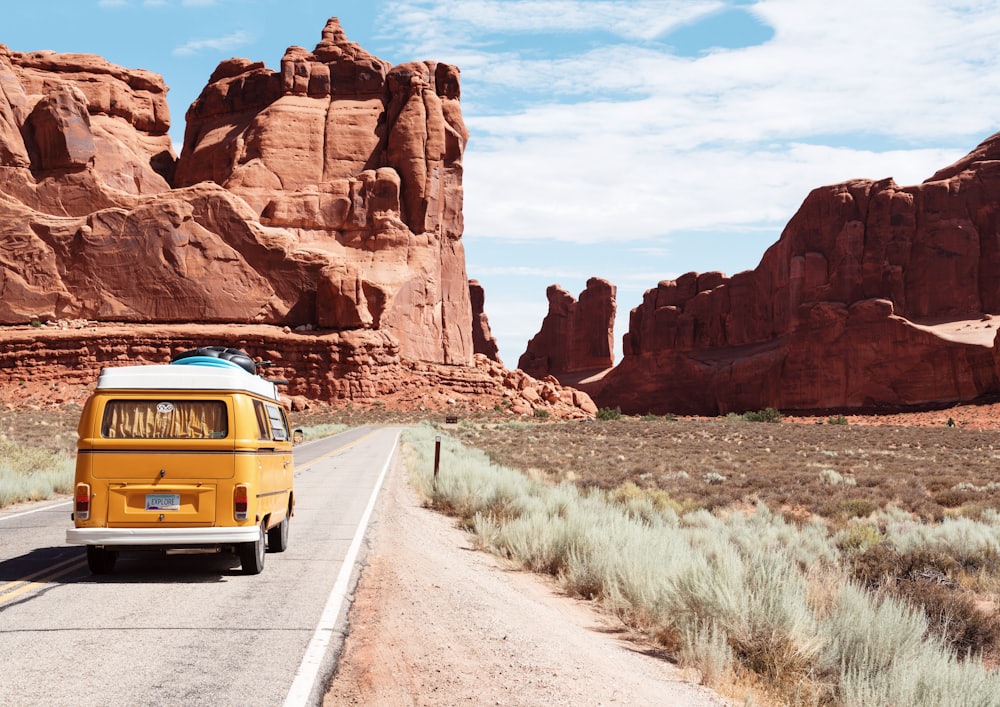
Thumbnail: The best things on a road trip are free. The $500 just buys the frame.
How to Plan a Road Trip on a $500 Budget
Somewhere between the gas prices on the news and the hotel prices on the booking apps, a quiet lie took root: that a road trip is a luxury. That the open road now has a tollbooth on every horizon, and that real travel belongs to people with real budgets. And so the trip you've been dreaming about — the one with the winding byway, the diner pie, the sunset that stops the car — keeps getting postponed to a "someday" that never quite arrives. This article is here to retire that lie. Five hundred dollars, planned with intention, is not a sad road trip. It is a real one — five or six days of open highway, campfire smoke, strange roadside wonders, and stories you'll retell for years. The road was never expensive. The default way of doing it is expensive. Those are different problems with different solutions, and every solution you need is in this guide.
Let's be clear about what we're building, because honesty is the first budgeting tool. Five hundred dollars per person, for roughly five to six days, traveling as two people sharing one car — because shared costs are the single greatest force in budget travel. Gas split, camping split, misery at mile 400 split. If you're traveling solo, the same plan works with modest adjustments we'll flag along the way. And if $500 is genuinely not spare money in your life right now, honor that — this guide will still be here, patient as asphalt, when the season changes. For everyone else: buckle up. Here's how the math becomes magic.
Part 1: The $500 Mindset (Where the Money Actually Goes)
Every road trip budget is secretly three budgets wearing a trench coat: fuel, food, and sleep. Control those three and the trip costs what you planned; ignore them and no amount of couponing saves you, because they consume roughly eighty percent of every travel dollar. The good news is that all three are almost entirely within your control — unlike a flight price or a concert ticket, they respond directly to your choices, hour by hour.
And here is the deeper reframe that makes budget travel joyful instead of punishing: the best road trip moments are structurally free. The overlook where the valley turns gold at 7 PM. The two-lane byway that was better than the destination. The world's largest ball of twine (entry: free, dignity: optional). The conversation with a stranger at a campsite. You are not paying $500 to experience the trip; the experience is free. You are paying $500 to be present for it — to move your body across the map, fed and rested, for five days. That is a radically affordable proposition, and it changes how every decision feels. You're not depriving yourself of luxury. You're spending on presence and skipping everything else.
The budget rule that governs everything: spend on movement and presence; skip everything that merely decorates them. Gas to reach the sunset: yes. A $19 "scenic overlook parking experience" when the pullout a mile back was free: no.
Part 2: The Envelope Math (Your $500, Assigned)
Here is a complete, realistic per-person budget for a five-to-six-day trip with two people sharing a car. Treat the numbers as envelopes — when an envelope is empty, that category is done for the trip, and the buffer politely covers what life insists on.
- Fuel — about $110. Roughly 1,400–1,600 miles at 30 mpg, split two ways, with fuel-smart driving. The envelope shrinks further with slower speeds and proper tire pressure.
- Food & water — about $140. Twenty-five-ish dollars a day of cooler-and-camp-stove eating, plus two or three budgeted diner splurges, because a road trip without one legendary local meal is a documentation error.
- Sleep — about $110. A mix of free dispersed camping, cheap state parks ($15–30 a night, split), and one hostel or budget-motel night for a real shower and a horizontal reset.
- Fun & wonders — about $70. State park day fees, the odd museum, the ice cream, the trailhead parking, the roadside attraction that absolutely must be photographed.
- The Buffer — about $70. Untouched, sacred, boring money. A slow leak, a rain night that demands a cheap motel, a price spike at a remote gas station — the buffer absorbs reality so the trip doesn't absorb your mood.
Total: $500. Notice what's missing: tolls of despair, restaurant breakfasts, souvenir magnets for every cousin, and the $160-a-night hotel that the booking app swears you "deserve." You don't need them. You need the five envelopes. Write them on a card. Tape it to the dashboard. That card is now a member of the crew.
Part 3: Route Planning That Saves Real Money
The route is where budgets are won before the car ever moves. Start with shape: a loop generally beats an out-and-back, because every mile shows you something new, and a loose loop of 1,400–1,600 miles keeps daily driving in the sweet spot of 250–350 miles — enough distance to feel like an adventure, short enough that you're not paying $60 a day just to stare at a white line.
Then plan fuel like a strategist. Gas prices change by the mile; stations inside cities, near parks, and along interstate exits charge a premium for your laziness. The fix: top up in cheap zones — small towns and highway stretches away from exits — using a fuel-price app, and never enter a national park or a big city on fumes. Filling up ten miles before the expensive zone is routinely $5–10 saved per tank, which is an entire ice cream budget defended.
Now the fun part: build the route around free anchors. Every region is full of them — scenic byways that cost nothing and outshine the paid attractions, state and national forest land with free or nearly free access, waterfall trailheads, historic downtowns, free museum days, sunset pullouts, and the glorious ecosystem of roadside oddities. Pick three to five anchors per day, put them on the map in order, and then — crucially — leave slack. The unplanned turnoff, the recommended-by-a-stranger diner, the beach that wasn't on any list: slack is where the stories come from, and slack costs nothing. A budget road trip with slack beats a luxury one with a schedule, every single time.
Part 4: The Car — The Cheapest Hotel You Own
Your car is the trip's biggest asset and its biggest risk, so give it the $0-to-$50 pre-trip ritual that protects the whole budget: tire pressure (the single best free fuel-economy and safety upgrade), oil and coolant levels, wiper blades, and a glance at the spare. A five-minute driveway check prevents the $300 surprise that murders $500 trips. If a real inspection is affordable, it's one of the highest-return purchases in travel.
Then drive like the budget depends on it, because it does: at highway speeds, every 5 mph over 60 is roughly a dollar or more per tank handed to the wind — so set the cruise at 60–65, ease off the jackrabbit starts, and let momentum do the work on downhills. Strip the trunk of the gym bag era's accumulated weight, keep the tires at the door-jamb pressure, and use the A/C wisely at speed. None of this is sacrifice; it's the quiet craft of moving a ton of metal across a continent for pocket change, and there is a specific, greasy-handed pride in watching the trip computer's MPG climb while the playlist rolls.
Part 5: Sleeping for Nearly Nothing
Sleep is the envelope most people blow, so here is the ladder, from free to cheap, that keeps it around $20 a night or less.
Rung one: free dispersed camping. National forests and BLM land across much of the country allow free camping outside developed campgrounds — the iOverlander, FreeRoam, and Campendium apps make finding legal, safe spots almost a game. You trade the shower and the picnic table for solitude, stars, and a price of zero. Rung two: state parks, typically $15–30 a night (split with a partner), with hot showers, real bathrooms, and the best-located campsites in America — often literally inside the scenery you came to see. Rung three: the reset night — once per trip, a hostel bunk or a no-frills motel, bought deliberately, not desperately, for the shower, the laundry, and the sleep that only a mattress provides. Planned cheap sleep is strategy; emergency cheap sleep is a tax.
If your vehicle is your bedroom — car camping is a legitimate and wonderful branch of this hobby — the rules are simple: legality first (never assume overnight parking is allowed; truck stops and many big-box lots often tolerate it, rest areas vary by state, and dispersed public land is the clean answer), safety second (park level, tell someone your spot, trust the gut that says move), and comfort third (a sleeping pad, a blackout window cover made from a dollar-store reflective sunshade, and a headlamp). And wherever you sleep, master the shower economy: campground showers, truck-stop showers for $10–15, gym day passes, and — the road tripper's spa — a clean swimming hole. You will be astonished how good a $12 shower and a lake can make a human being feel.
Part 6: Eating Well on $25 a Day
The cooler is the second hotel: it keeps your budget fed. Freeze water bottles the night before departure — they're ice packs for day one and cold drinking water for day two — and build the menu around the immortal road-trip staples: oatmeal and peanut butter for mornings; tortillas, canned beans, rice, and hard vegetables for camp dinners; hard-boiled eggs, apples, trail mix, and cheese sticks for the in-between hunger that otherwise costs $7 at a gas station. A one-burner camp stove and one pot cover ninety percent of cooking, and the whole grocery haul for five days lands near the $100 mark — which leaves room, by design, for the splurges that matter.
Because here is the philosophy: budget eating is not joyless eating. It is ruthless on the boring calories, generous on the legendary ones. Skip the airport-priced bottled water (carry jugs, refill free) and the sad highway fast food — and then spend, without a shred of guilt, on the small-town diner's pie, the taqueria three locals are standing in line for, the ice cream at the overlook. Two or three of those moments, budgeted at $15–20 each, will be among the top five memories of the trip. The envelope system doesn't forbid joy; it protects joy from being drowned by accident.
Part 7: Free and Cheap Fun (The Actual Point of the Trip)
Fill the days with the things money can't price and mostly doesn't try to: scenic byways and their pullouts; trailheads that ask only for a $5 parking honesty box; state park day-use fees of a few dollars; free historic downtowns and college towns built for wandering; farmers markets for a $6 lunch and an hour of local color; sunset spots found by simply facing west at 7 PM; and the roadside attractions — the giant things, the weird museums with a tip jar, the world's longest garage-sale stretches. Give the Fun envelope about $70 and let it buy the small fees and the big laughs, and notice the pattern: the cheapest column of the budget produces the most expensive-feeling moments.
Part 8: The Buffer, the Kit, and the Boring Heroics
The $70 buffer is not pessimism; it's the shock absorber that keeps a flat tire from becoming a ruined trip. It stays untouched until reality demands it, and if the trip ends with the buffer unspent, it becomes the victory bonus — the last-night dinner, the extra tank for the drive home, or the first $70 of the next trip. Around it, pack the boring heroes: a real spare and the jack, jumper cables, a first-aid kit, a flashlight, a gallon of water that never gets drunk, and a paper map or downloaded offline maps, because the desert does not care about your signal. Tell someone your route. Check in daily with a text. These cost nothing and are worth everything.
One honest pre-trip question: roadside assistance. If you don't have it, a basic annual plan (roughly $60) is arguably outside the $500 but inside wisdom — one tow can cost triple that. If the budget truly can't stretch, the buffer plus the pre-trip car check is your plan B, and driving with extra caution is plan B's bodyguard.
Part 9: A Sample Five-Day $500 Week (The Math, Alive)
- Day 1 — Roll out (spend: ~$75). 300 miles on cheap-zone fuel ($55 split), grocery haul already loaded, first night at a state park ($35 split), camp-stove pasta, sunset from the overlook you didn't pay for.
- Day 2 — The free byway day (~$55). Scenic byway, two trailhead hikes ($10 parking), dispersed national-forest camp (free), stars included at no charge.
- Day 3 — Town day (~$95). Farmers-market lunch ($6), odd museum ($12), the legendary diner pie ($18), hostel bunk for the shower reset ($55), laundry done, humans restored.
- Day 4 — Wonder day (~$85). State park day use ($8), the roadside attraction with the tip jar ($5), swimming-hole spa (free), camp dinner, fuel top-up before the expensive zone ($60 split).
- Day 5 — The long way home (~$120). 400 easy miles at 62 mph, one great taqueria stop ($15), the buffer untouched, the playlist doing its final act.
Running total: about $430–470 depending on your region and your pie discipline — with the buffer still standing guard. That's the whole trick: not one heroic sacrifice, but forty small, almost invisible choices, each one trading a decoration for a presence.
Part 10: The Mistakes That Blow the Budget
- Fueling inside the expensive zones — parks, cities, interstate exits. Ten miles of patience is ten dollars.
- Eating every meal at restaurants — the single fastest way to turn $500 into $900. Cooler by default, diner by intention.
- Skipping the pre-trip car check — the $0 ritual that prevents the $300 disaster.
- Speeding — paying a wind tax at 75 mph while the budget bleeds.
- No buffer — one rain night or slow leak and the trip becomes a stress experiment.
- Over-tight scheduling — no slack means paid shortcuts and tired, expensive decisions.
- Souvenir creep — the magnet is $8; the memory of the overlook is free and fits in no suitcase.
- Last-minute lodging — booked in desperation at 9 PM, it's triple the planned price. Plan the reset night; earn the cheap rate.
Part 11: Frequently Asked Questions
Is $500 realistic in 2026? For five to six days with camping and cooler cooking, genuinely yes — the sample itinerary above is conservative on purpose. If you refuse camping and want motels nightly, budget $700–900 instead; the guide still works, the Sleep envelope just grows.
What if I'm traveling solo? The solo tax is real but survivable: fuel and camping no longer split, so add roughly $100–150, lean harder on dispersed free camping and hostels, and consider a smaller loop to cut miles. Solo road trips trade some economy for a freedom that regular money cannot buy.
How do I keep my phone alive and useful? A 10,000 mAh power bank, a car charger, and — critically — download offline maps for the whole route before leaving Wi-Fi. The paper map in the glovebox is not nostalgia; it's redundancy.
Is budget camping safe? As safe as you make it: legal spots, level ground, a shared itinerary, a charged phone plus a plan for no-signal zones, food stored properly in bear country, and the timeless rule of leaving any campsite better than the internet found it.
What's the one thing worth spending extra on? The reset night. One real shower, one real mattress, one load of laundry, mid-trip. It costs $50 and buys back the energy to enjoy the other $450. Every experienced budget road tripper has learned this the tired way, so you don't have to.
Conclusion: What $500 Actually Buys
Let's be honest about the accounting at the end, because it's the loveliest part. The $500 bought gas and groceries and a few nights under trees. But look at what came back on the receipt: the valley going gold at the free overlook. The pie that justified its own legend. The campsite neighbor's story about the elk. The playlist argument settled at mile 300. The version of you that came home slightly lighter, with a phone full of sunsets and a head full of miles. None of that was in the envelopes. The money just opened the door and stepped aside.
So plan the loop, tape the envelopes to the dash, freeze the water bottles, and check the spare. The road is not a luxury, and it never was — it's a public library of wonders with free admission, and your library card costs five hundred dollars. Go spend it badly on the right things. The highway is waiting, the pie is cooling on a small-town counter somewhere along your route, and the sunset, as always, is on the house.
(If the thumbnail image above doesn't load on your device, swap its src with either https://images.unsplash.com/photo-1470071459604-3b5ec3a7fe05?w=1000&q=70 or https://images.unsplash.com/photo-1447752875215-b2761acb3c5d?w=1000&q=70 — both are verified working landscapes that fit this article.)