
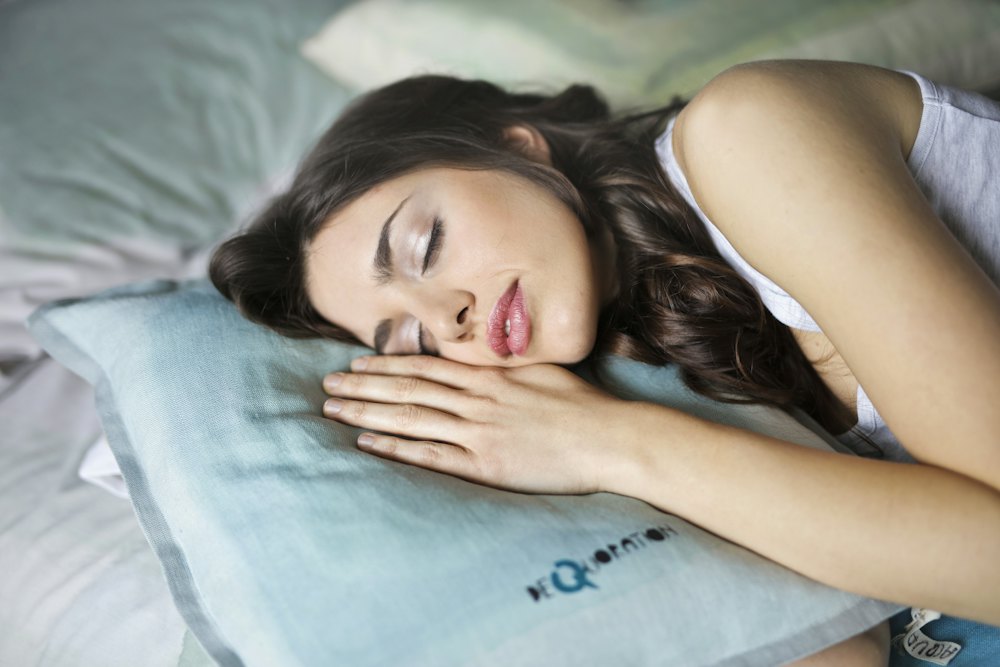
Thumbnail: The 2 AM ceiling stare. Tonight, for the last time.
How to Fall Asleep Faster (Science‑Backed Techniques)
It's 2:14 in the morning. The house is silent in that particular way that only exists at 2 AM — a silence so complete you can hear the refrigerator hum and your own thoughts arguing with each other. You do the mental math again: if you fall asleep right now, that's five hours and forty-six minutes. If you fall asleep in twenty minutes, five and a half. You squeeze your eyes shut and try to sleep, the way you'd try to win an argument, and your heart responds by beating a little faster, as if to say: oh, are we doing something? Are we fighting? Should I mobilize?
If this scene lives in your memory — and statistically, it lives in almost everyone's — I want you to hear something before we go any further: you are not broken. You are not weak-willed, and you are not doomed to be a bad sleeper forever. The cruel irony you've been experiencing has a name in sleep science. Sleep is not something you can do. It is something you allow. Every other achievement in adult life rewards effort — push harder, try more, grind — and sleep is the one domain where effort is the enemy. The harder you grasp at it, the faster it slips away. Trying to force sleep is like trying to force yourself to be calm during an argument: the attempt itself is the disruption.
Here is the good news, and it is very good: modern sleep science has mapped the biology of falling asleep in extraordinary detail. We know the molecules, the temperatures, the light wavelengths, the breathing patterns, and the mental tricks that initiate the transition from wakefulness to sleep. Falling asleep is not a passive power-down; it is an active, choreographed landing sequence, and like any landing, it requires the right conditions, the right speed, and the right runway. This guide gives you the complete runway — every science-backed switch you can flip, arranged into a system you can start tonight. No pills required, no gadgets required, no perfection required. Let's begin.
Part 1: Sleep Is Not a Switch — It's a Landing Sequence
To understand why you can't fall asleep, you need to meet the two invisible forces that govern your sleepiness every day. Sleep researchers call this the Two-Process Model, and it is the master key to everything in this article.
Process S is your sleep pressure. From the exact moment you wake up, your brain accumulates a molecule called adenosine — a byproduct of the energy your cells burn all day. Think of it as steam building in a pressure cooker. Every hour awake adds steam; by nightfall, the pressure is what makes your eyelids heavy and your thoughts syrupy. When you finally sleep, the brain flushes the adenosine away, and you wake with a clean gauge. This is why skipping sleep feels like a debt, and because it is one.
Process C is your circadian rhythm — a roughly 24-hour internal clock, seated in a tiny region of the brain called the suprachiasmatic nucleus. This clock doesn't care how tired you are; it cares about light and temperature. At the right evening signals, it releases melatonin, the hormone of darkness, and begins lowering your core body temperature, opening the runway for sleep. At the wrong signals — bright light at night, chaos in your schedule — it holds the runway closed no matter how much steam Process S has built.
Here is the golden rule of falling asleep fast: the two processes must align. High sleep pressure plus a circadian system that believes it is night equals rapid, effortless sleep onset. Most insomnia is simply the two processes out of sync — exhausted but wired is the classic phrase, and it describes a body with a full pressure cooker and a clock that still thinks it's afternoon. Nearly every technique in this guide exists to do one of three things: build Process S, align Process C, or get your aroused nervous system out of the way. That's the whole game.
Part 2: Master Your Light Diet (The Circadian Anchor)
Light is the single most powerful time-giver for the human body — the physical signal that tells your master clock what time it is. And here is the modern tragedy: most people who struggle to fall asleep are getting the light diet exactly backwards. Too little bright light by day, too much bright light by night. Fixing that inversion is the highest-leverage change in this entire guide, and it costs nothing.
Morning: Bank the Bright Light
Your sleep routine actually begins at sunrise, not bedtime. When natural daylight strikes specialized cells in your retina, a signal travels to your master clock and triggers a healthy morning pulse of cortisol — and critically, it starts a timer that releases melatonin roughly fourteen to sixteen hours later. In other words, the quality of your sleep tonight is partly decided by the light you get tomorrow morning. People who get bright morning light fall asleep faster, sleep deeper, and wake more refreshed.
The protocol is simple and free: within thirty to sixty minutes of waking, get outside and let your eyes receive natural daylight for ten to thirty minutes — about five to ten on a sunny day, ten to twenty on a cloudy one, and twenty to thirty under heavy overcast. Why outside? Because intensity matters enormously. A brightly lit office is a few hundred lux; even a cloudy sky delivers ten thousand or more. Your brain needs that massive photon dose to set the timer firmly. Windows filter the light and narrow your field of view, so step onto a balcony, a porch, or the sidewalk. Have your coffee out there if you like. You are not taking a walk; you are programming tonight's melatonin.
Evening: Dim the World Like a Sunset
Now the other half. Your eyes evolved to see darkness after sunset, and darkness is the cue that releases melatonin. Instead, they now receive bright, blue-rich light from LEDs, laptops, and phones until the moment your head hits the pillow — and your master clock interprets that as "the sun is still up," suppressing melatonin and delaying the entire landing sequence. Overhead ceiling lights are especially disruptive, because light from above mimics the sun's position in a way your ancient circuitry takes seriously.
Adopt what I'll call the campfire rule for the last two to three hours of the day: turn off the overheads and switch to low, dim lamps placed below eye level, in warm red-orange hues. Your light-sensitive retinal cells are highly responsive to blue wavelengths and nearly blind to long red ones, which is why candlelight and firelight — the light our ancestors actually saw at night — barely touch your melatonin. Enable night-mode filters on your devices, and if you must screen-work late, amber blue-light-blocking glasses genuinely help. Think of your evening like a campsite: low to the ground, dim, and glowing warm. That single environmental shift is one of the most powerful sleep-onset accelerants known.
Part 3: The Thermal Trigger (Cool the Core, Warm the Skin)
Here is a hard biological rule that almost nobody knows: for sleep to begin, your core body temperature must drop by about one to two degrees Celsius (two to three degrees Fahrenheit). This drop is part of the circadian landing sequence, and anything that blocks it blocks sleep — a warm bedroom, a heavy duvet, a large late meal, an intense evening workout. It is why you sleep beautifully in a cold cabin and terribly in a hot hotel room. Your thermostat is not a comfort setting; it is a sleep switch.
Set the bedroom cooler than feels intuitive — roughly 60 to 67°F (15.5 to 19.5°C) is the range sleep laboratories keep finding. If you share the bed with someone who runs cold, negotiate with separate duvets; it is one of the great marriage-saving inventions of the modern era. Keep your sleepwear breathable, and if your mind races while your feet are cold, put on loose socks — cold feet constrict blood vessels and actually trap core heat, while warm feet dilate vessels and help dump it.
Now the most delightful paradox in all of sleep science: the fastest way to cool your core is to heat your skin. Taking a warm bath or shower sixty to ninety minutes before bed draws blood to the surface of your body; when you step out, that heat radiates away and your core temperature plunges at an accelerated rate, mimicking and amplifying the natural evening drop. Studies show this "warm bath effect" significantly shortens the time it takes to fall asleep. No tub? A hot shower works. The sensation you're chasing is that slightly-cool, heavy-limbed feeling when you step out of the steam — that feeling is your landing gear coming down.
Part 4: Flip the Nervous System Switch (Breathing and the Vagus Nerve)
You can have perfect darkness, a cool room, and a full pressure cooker of sleepiness — and still lie awake if your autonomic nervous system is stuck in sympathetic "fight-or-flight" mode. Worry, deadlines, and especially anxiety about not sleeping all keep adrenaline flowing, and adrenaline does not negotiate. To fall asleep you must manually engage the parasympathetic "rest-and-digest" branch. And here is the wonderful part: there is a remote control for it, and it is your breathing. Inhaling slightly accelerates the heart; exhaling slows it, via the vagus nerve. Long, slow exhales are the vagus nerve's favorite language.
The Physiological Sigh
Popularized by neuroscientists and observed in everyone from sleeping infants to people on the verge of tears, the physiological sigh is the fastest real-time calm-down tool known. Take one deep inhale through the nose; at the top, take a second quick "top-up" sniff through the nose; then one long, slow, complete exhale through the mouth, like blowing through a straw. Repeat two or three times. The double inhale re-inflates collapsed air sacs in the lungs, letting the long exhale offload carbon dioxide efficiently and lower your heart rate within a minute. It is the body's own emergency brake, and you can press it lying in the dark.
The 4-7-8 Method
For a longer descent, use the 4-7-8 pattern: inhale quietly through the nose for four seconds, hold for seven, exhale slowly and fully through the mouth for eight, making a soft whoosh. Four cycles. Because the exhale is double the inhale, each cycle leans on the parasympathetic brake, and the counting itself occupies just enough attention to crowd out the day's replays. It is a tranquilizer you carry in your ribs.
Progressive Release and the Military Method
If your body is the tense part, try progressive muscle relaxation: starting at the forehead, deliberately tense each muscle group for five seconds, then release — forehead, jaw, shoulders, arms, hands, chest, belly, legs, feet — feeling each region melt into the mattress. The U.S. military's famous sleep method is a streamlined cousin: relax the face completely (jaw, tongue, eyes), drop the shoulders and arms one side at a time, exhale and relax the chest, then the legs from thighs to feet, and finally clear the mind for ten seconds by repeating "don't think, don't think, don't think." It takes weeks of practice to master, but it teaches the deepest skill in this whole guide: that physical release, done systematically, drags the mind down with it.
Part 5: Quiet the Racing Mind (The Cognitive Toolkit)
For many of us, the body is ready long before the mind. The lights go off and the committee convenes: the email you should have written, the conversation you should have handled differently in 2019, the to-do list for tomorrow, the vague hum of everything unfinished. Lying down removes external stimulation, which hands the floor to the brain's default mode network — the very network that replays worries. You need tools that occupy the mind just enough to stop the loops, without engaging it enough to wake you. Here are the four that have real science behind them.
Cognitive Shuffling
Developed by cognitive scientist Luc Beaudoin, cognitive shuffling mimics the random, fragmented imagery that naturally occurs as we drift into sleep — the reason the technique works is that it tricks the brain into thinking it's already falling asleep. The method: pick a neutral word, like "BEDTIME." Take the first letter, B, and visualize unrelated words starting with it — bear, ball, basket, boat — holding each image for a few seconds. When you run out, move to E. The random, emotionally neutral imagery scrambles the anxious loop and signals the brain that it's safe to power down. It is "counting sheep" rebuilt with actual cognitive science, and most people never make it past the second letter.
The Cognitive Offload
If tomorrow's tasks are the intruders, evict them onto paper. Two hours before bed, spend five minutes writing every open task and worry on a physical list, each with its next step. Research published in the Journal of Experimental Psychology found that participants who wrote specific to-do lists for the coming days fell asleep significantly faster than those who journaled about completed tasks. Written down equals safely stored equals no longer rehearsed. The list is not productivity; it is a parking lot for the committee.
Paradoxical Intention
When the anxiety is about sleep itself — the watching, the checking, the trying — there is a beautifully counterintuitive tool from clinical practice called paradoxical intention: lie comfortably in the dark and gently try to stay awake, telling yourself "I'm just resting, I'm not going to sleep yet." Removing the goal removes the performance anxiety, and sleep, which only arrives when it is not being chased, tends to sneak in through the unlocked door. It is the closest thing sleep science has to a koan.
Stimulus Control (The 20-Minute Rule)
This is the cornerstone of CBT-I, the gold-standard treatment for chronic insomnia, and it is non-negotiable if you've spent months or years lying awake: the bed is for sleep only. If you haven't drifted off within roughly twenty minutes (estimate; never check the clock), get up, go to a dim room, and do something calm and boring — a dry book, folding laundry, quiet music — until your eyelids grow heavy, then return to bed. Repeat as needed. This feels like surrender but is actually reconditioning: every hour spent awake and frustrated in bed teaches your brain that bed equals wakefulness, and the 20-minute rule unteaches it, one boring chair session at a time. It is one of the most powerful fixes in all of sleep medicine.
Part 6: The Chemical Landscape (What You Consume and When)
Your nervous system runs on chemistry, and everything you eat and drink tilts it toward wakefulness or sleep. You don't need purity; you need timing and awareness. Here are the levers that matter most.
Caffeine: The Half-Life Trap
Caffeine doesn't create energy; it blocks adenosine receptors, masking your sleep pressure while the steam keeps building. Its half-life is roughly five to seven hours, which means a large coffee at 4 PM still leaves half its caffeine parked on your receptors at 10 PM — and a quarter of it at 4 AM, quietly fragmenting the sleep you did get. The fix is a hard curfew: no caffeine within ten to twelve hours of bedtime. For most people, the last cup lands at noon or 1 PM. Keep the morning ritual; move its hour. This single change shortens sleep-onset time for a huge share of chronic light sleepers.
Alcohol: The Sedative That Isn't
A nightcap will knock you out — alcohol is a central nervous system depressant — but sedation is not sleep. It fragments your night with micro-awakenings, heavily suppresses restorative REM sleep, and, as your liver clears it, triggers a rebound of stimulating glutamate that jolts you awake at 3 AM with a racing heart. The "relaxing glass of wine" is often the exact reason you stare at the ceiling four hours later. If you drink, do it with dinner and stop at least three hours before bed. Alcohol borrows sleep from tomorrow, with interest.
Melatonin: The Microdose Truth
Melatonin is a hormone of darkness, not a sleeping pill — it shifts the timing of sleep more than it forces sleep. And commercial gummies are absurdly overdosed: five to ten milligrams is up to thirty times your brain's natural pulse, which can cause grogginess, vivid dreams, and next-day fog. Sleep researchers suggest microdoses of 0.3 to 1 mg, taken an hour or two before bed, and mainly for jet lag or shifting your clock — not as a nightly hammer. More is not better; more is just more.
The Gentle Helpers
A few compounds have real, if modest, evidence behind them, and all deserve a conversation with your doctor first: magnesium threonate or bisglycinate supports the calming GABA system; L-theanine, the amino acid from green tea, raises relaxed alpha brain waves; and apigenin, chamomile's active flavonoid, binds mild sedative receptors — which is why a cup of chamomile tea an hour before bed is both ritual and chemistry. On the food side, small studies found that two kiwifruit an hour before bed improved sleep onset, likely via serotonin precursors, and tart cherry juice offers trace natural melatonin. Think of these as gentle nudges on a system you've already set up correctly — never as replacements for light, temperature, and routine.
Dinner Timing
A large meal close to bedtime forces digestion to work, raises core temperature, and can trigger reflux that disturbs sleep even when you don't fully wake. Aim to finish dinner two to three hours before bed; if you're hungry later, keep it small and simple. The goal is a body that is digesting nothing and defending nothing when the landing sequence begins.
Part 7: Build the Cave (The Sleep Environment)
Your ancestors slept in environments that were dark, cool, and quiet by default. Rebuild that cave, and sleep follows.
Darkness: blackout curtains or a high-quality sleep mask are among the cheapest sleep upgrades in existence. Even light through closed eyelids can register. Kill the standby LEDs — tape over the router's little blue snitch if you must.
Quiet: if your world is noisy, mask it. Pink noise — the deeper spectrum of rainfall, wind, or a waterfall — masks disruptive sounds and, in studies, has been shown to enhance slow-wave deep sleep. A fan works too: white noise, gentle airflow, and a cooler room in one purchase.
Cool and comfortable: the 60–67°F rule again, breathable bedding, and a pillow that actually suits your sleeper position. The mattress you fight every night is a tax on every tomorrow.
No clocks: turn the alarm clock around and put your phone in another room or across the room. Clock-watching delivers a micro-dose of adrenaline ("3:14 — only four hours left!") that is precisely the chemistry you're trying to dissolve. If you need an alarm, a cheap alarm clock in a drawer of the far nightstand outperforms a phone that also holds your emails.
Part 8: The Perfect 24-Hour Sleep Day
Putting it all together, here is what a science-optimized day looks like for someone who wants to fall asleep effortlessly at 10:30 PM. Treat it as a menu, not a law.
- 7:00 AM — Wake at the same time every day, even weekends. Get outside for 10–30 minutes of daylight. Hydrate.
- 8:00 AM — First coffee, ideally delayed 60–90 minutes after waking to avoid the afternoon crash.
- 1:00 PM — Caffeine curfew. Last cup.
- 5:30 PM — Finish hard exercise; movement earlier is a gift to sleep, but late intensity raises core temperature.
- 7:00 PM — Dinner finished.
- 8:00 PM — The light shift: overheads off, lamps on, screens filtered or glasses on.
- 9:00 PM — Cognitive offload: five minutes, pen and paper, tomorrow's list.
- 9:15 PM — Warm shower or bath; thermostat to about 65°F; bedroom into darkness.
- 9:45 PM — Chamomile tea, a fiction book under warm light — nothing about work, nothing thrilling.
- 10:15 PM — Bed. Physiological sighs, then cognitive shuffling or a body scan. Lights out.
- 10:30 PM — Asleep. Not forced. Allowed.
Notice what this day does: it builds sleep pressure all day long, sets the circadian timer at sunrise, removes every blocker in the evening, and ends with a descent ritual your brain will learn to recognize as the runway. Consistency is the magic ingredient — the same wake time, seven days a week, matters more than almost anything else on this list, because a predictable rhythm is what the master clock craves most.
Part 9: The 3 AM Wake-Up Protocol
Falling asleep is half the battle; the other half is the 3 AM ceiling stare. Middle-of-the-night waking usually has one of four culprits: a too-warm room raising your core temperature; an alcohol rebound; a blood-sugar crash from a sugary late meal, which makes the brain fire cortisol and adrenaline to rescue glucose; or chronic stress releasing the morning cortisol pulse early. Notice the pattern: none of these are character flaws. They are physical triggers, and physical triggers can be removed.
When it happens, run the rescue protocol. Never check the clock — the time readout is an adrenaline injection. Keep lights off to protect your melatonin. Run physiological sighs or a body scan with eyes closed, or put on a quiet NSDR or yoga nidra track — a guided deep-rest practice that shifts brainwaves toward drowsy theta and lowers arousal even if you never fully sleep. If you're still awake after about twenty minutes, apply stimulus control: move to a dim chair with a boring book until drowsy, then return to bed. And if you suspect a genuine glucose crash — shaky, hungry — a tiny spoon of honey can quiet the cortisol alarm. Calm, dark, and boring is the recipe for returning to sleep.
Part 10: Myths and Modern Traps
A few beliefs actively keep people awake, and they deserve a proper burial.
"I'll catch up on the weekend." You cannot fully repay sleep debt, and sleeping in on Saturday shifts your circadian clock, producing "social jet lag" that makes Sunday night and Monday morning worse. Consistency beats compensation.
"I function fine on six hours." A tiny fraction of humanity carries a genetic mutation that makes short sleep safe; almost everyone who believes they have it simply has a chronically sleep-deprived brain that has forgotten what rested feels like. Most adults need seven to nine hours, and the deficit shows up as irritability, fog, cravings, and a shorter fuse long before it shows up as yawns.
"Naps will ruin my night" / "Naps will save me." Both can be true. A 20-minute nap before 3 PM boosts function without denting sleep pressure; a long late nap vents the pressure cooker and delays bedtime. If you struggle to fall asleep at night, skip naps entirely during the reset weeks — push through the afternoon dip so you arrive at bedtime genuinely exhausted.
"My sleep tracker says I'm broken." A new condition has emerged called orthosomnia — anxiety about sleep data that itself causes insomnia. Wearables estimate sleep with wrist movements and heart rate; they are guesses, not diagnoses, and a bad score can make you feel exhausted by suggestion alone. If your tracker makes you anxious, put it in a drawer for a week. How you feel at 2 PM is a better metric than any algorithm's grade.
Part 11: When It's More Than a Bad Habit
Everything in this guide addresses the ordinary insomnia of modern life. But some sleep problems are medical, and they deserve a professional, not a playlist. If you've run honest protocols for four weeks with no improvement — or if you snore loudly and gasp or choke at night, wake unrefreshed no matter the hours, and feel daytime sleepiness that borders on danger — ask a doctor about sleep apnea, a common and very treatable condition in which breathing repeatedly pauses overnight. If your legs crawl, itch, or refuse to be still at night, ask about restless legs syndrome. If your clock is simply shifted — unable to sleep until 3 AM, unable to wake at 8 — that may be delayed sleep-phase syndrome, treatable with timed light and melatonin under guidance. And for chronic insomnia itself, the gold-standard treatment is CBT-I, structured cognitive behavioral therapy that outperforms sleeping pills long-term. Seeking help for sleep is not weakness; it is maintenance on the foundation of everything else you are.
Part 12: Frequently Asked Questions
How long should it take to fall asleep? A healthy sleep-onset time is roughly ten to twenty minutes. Falling asleep in under five minutes regularly is actually a sign of sleep debt, not skill; taking over thirty minutes most nights is the signal to apply this guide or seek help.
Does reading before bed help or hurt? It depends on the medium and the genre. A physical book or e-ink reader under warm light is excellent — engaging enough to crowd out worry, calm enough to induce drowsiness. A thriller on a glowing tablet is a stimulant in a costume. Choose fiction or history over your own industry's news.
What about weighted blankets? They use deep-pressure stimulation, which lowers heart rate and cortisol in many people, and the evidence for anxiety-related sleep trouble is genuinely encouraging. Around ten percent of your body weight is the usual guideline.
I work night shifts. Can any of this help? Yes, adapted: anchor your rhythm with bright light during your shift, wear dark sunglasses on the morning commute home, sleep in total darkness with blackout everything, and keep your schedule as consistent as your rotations allow. It is harder — you are swimming against the current — which is all the more reason to use every tool here.
Will these techniques work tonight? Some will — the sigh, the shower, the dark room, the offload. But understand that for a brain with months of learned bed-anxiety, the deeper reconditioning (stimulus control, consistent rhythm) takes one to three weeks. The first week is a rough draft. Commit to three. The compounding is the point.
Conclusion: Surrender to the Night
Here is the quiet truth at the bottom of all the science: sleep is not a performance you are graded on. It is a homecoming your body has been rehearsing since before you were born. Every technique in this guide — the morning light, the cool room, the long exhales, the parked worries, the boring chair — is simply a way of removing the roadblocks between you and a biology that has been perfecting sleep for hundreds of millions of years. You set the stage, dim the lights, and step aside.
So tonight: thermostat down, phone out, lights low, list written, shower warm. Take one deep inhale, a little top-up sniff, and one long, slow exhale. Unclench the jaw. Drop the shoulders. Let the day be over — it is, whether you review it or not. Trust the science, trust the body, and stop trying so hard. The dark is patient, and it is on your side.
Goodnight. Truly.